Master Biographies
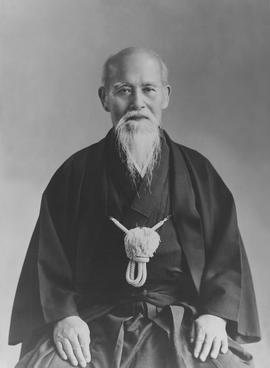
O-Sensei Morihei Ueshiba
Heaven is where you stand, and that is the place to train
O-Sensei Morihei Ueshiba
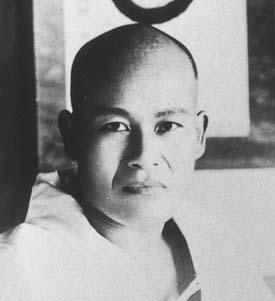
O-Sensei's life can be divided into four main periods, the first of which is the Tanabe period (1883-1912), named after Morihei Ueshiba's hometown.
Morihei Ueshiba was born in the village of Nishinotani (today part of Tanabe) in Wakayama Prefecture on December 14, 1883, as the fourth child of Yoroku and Yuki Ueshiba.
Young Ueshiba grew up in a well-to-do family. The master's father was a wealthy farmer and was politically active in his region. His mother, on the other hand, came from the Itokawa clan, which could boast roots dating back to the Heian period. Morihei was a frail and rather sickly child by nature, fond of books. In his youth, his father encouraged him to practice Sumo and swimming, and told him about the works of his grandfather Kichiemon - a famous samurai in the province. Teachers from elementary school had a great influence on young Morihei Ueshiba, introducing him to the Shinto religion and Shingon Buddhism. Interest in religion was so strong in young Ueshiba that his mother considered his future career as a priest of one of the religions, but ultimately her husband dissuaded her from this. As a result, Morihei was educated at the Yoshida Institute as an accountant. After completing his studies, he worked for a few months in the local tax office, but this work did not suit him, and in 1901 he set out for Tokyo, sponsored by his father, and founded Ueshiba Trading. Unfortunately, the business did not succeed, and within a year, after suffering from Beri-Beri, Ueshiba returned to his native Tanabe, where he married his childhood friend Hatsu Itokawa.
In 1903, Morihei Ueshiba was drafted into the military, and there is a certain anecdote associated with this. Specifically, at the first medical examination, he was rejected because he did not have the required height for the military (he was only 1.57m tall). To pass the verification, he undertook spinal stretching and hung from tree branches with a suspended weight. Ultimately, he managed to get into the military. He was assigned to the Fourth Division, 37th Regiment in Osaka. That same year, he was promoted to corporal in the 61st Regiment in Wakayama. Then he served on the front during the Russo-Japanese War. The Fourth Division to which he belonged fought in Manchuria and participated in the Battle of Mukden - at that time the largest land battle in history. During his service on the front, he was promoted to sergeant, and in 1907 he ended his military career and returned to his native Tanabe. There, his first child, daughter Matsuko, was born in 1911.
During this period, and thus in his youth, Master Ueshiba was already fascinated by Budo and martial arts. He trained in various styles of traditional ju-jutsu such as Kito-ryu, Shinkage-ryu, and obtaining an instructor diploma in Yagyu Shingan-ryu, and also trained in Tenjin Shinyo-ryu as well as Judo. After returning from the war, he also received the title of enlightened from his former teacher Mitsujo Fujimoto (Shingon Buddhism).
Hokkaido, 1912-1920
At that time, Hokkaido was still wild and inhabited mainly by the native inhabitants of those lands. The Japanese government encouraged its citizens to colonize those regions with various initiatives and donations. Morihei Ueshiba decided to join the pioneers of new lands and seek a new life in the north of the country. After returning from a reconnaissance expedition to the north, Ueshiba was already determined for a new life. He led a group of farmers who founded the settlement of Shirataki in 1912.
Life in the north was unfortunately hard and spared no one, the soil in those regions was quite poor, and the settlement was partially destroyed by fire. In 1918, Morihei Ueshiba was appointed to the settlement council, which by then numbered 500 families. That same year, his first son Takemori was born.
One of the most important events of this period was the accidental meeting in March 1915 at the Hisada inn in Engaru between Morihei Ueshiba and Sokaku Takeda, master of Daito-ryu Aiki ju-jitsu. Morihei was so moved by Takeda's martial art that he abandoned his duties and trained under sensei Takeda for a month. O-Sensei was a very dedicated student; he built a dojo on his property and invited Sokaku Takeda to his home as a permanent guest. In 1922, he received the kyoju dairi certificate - a teaching license - from the creator of Daito-ryu. From then on, Morihei Ueshiba became a representative of the style, traveling around the country and teaching others.
Ayabe, 1920-1927
At the end of 1919, sensei Ueshiba learned of his father's illness and decided to return to his native Tanabe, leaving most of his belongings to sensei Takeda. On the way, however, he decided to take a detour through the town of Ayabe to meet the leader of the Omoto-kyo sect - Onisaburo Deguchi. After finally returning home, Morihei learned that his father had died. Within a few months, he decided to become a devoted member of the sect and moved with his family to Ayabe. In 1920, another son Kuniharu was born, but unfortunately died of illness along with 3-year-old Takemori. Sokaku Takeda visited Ueshiba in Ayabe, but was not a supporter of the Omoto-kyo sect and did not get along with its Guru, which cooled the common contacts between the master and student. A very close bond between Morihei and Deguchi led to Ueshiba's acquaintance with ultranationalist, far-right groups such as Sakurakai and their ideologies. Morihei befriended members of the far right; group meetings took place in his dojo, and he also became a bodyguard for the founder of Sakurakai. In the summer of 1921, Kisshomaru Ueshiba was born.
Over the next few years, Morihei Ueshiba's fame as a master of martial arts grew. In the autumn of 1925, he was invited to Tokyo at the request of Admiral Isamu Takeshita. The audience was so enchanted by the demonstration that they asked Ueshiba to become an instructor of the imperial guard. However, after a few months, his connections with the sect and acquaintance with Deguchi Onisaburo were discovered. This forced Ueshiba to return to Ayabe for a few months. In 1926, Admiral Takeshita again invited Morichei to the capital. This time, Ueshiba moved there with his entire family.
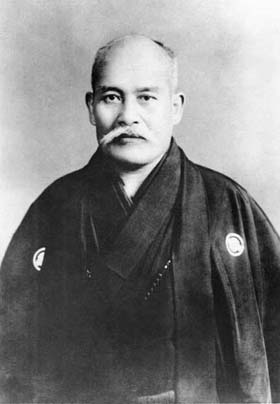
Tokyo, 1927-1942
The stay in Tokyo was a period of stabilization and further development of sensei Ueshiba as a master of martial arts. During this period, he worked as an instructor for the Japanese army, navy, imperial court, and also in the editorial office of the most famous newspaper in Japan - Asahi Shimbun. He also traveled to Manchukuo - Manchuria occupied by Japan - and taught his martial art at the local university. In the late 1930s, feeling the threat of World War II hanging over the world, he joined pacifist movements and tried to undertake various initiatives to prevent Japan from joining the global conflict. During this time, he also named his son Kisshomaru as the successor to his martial art school. During this period, the Aikikai Hombu Dojo was built in 1931.
Iwama, 1942-1969
In 1942, tired of unsuccessful attempts to prevent the war and the policies pursued by the authorities in Tokyo, he moved from the capital to Iwama in Ibaraki Prefecture, where he purchased 17 acres of land. On site, he founded a dojo and a temple. During this period, he traveled extensively around the country, especially in the Kansai region, where he taught and promoted Aikido. Hombu Dojo at that time served as a shelter for refugees affected by the cruelties of war. In the provinces, sensei Ueshiba could finally again devote himself to his old passion, which was farming. This helped his family and students survive the hard times of the war when food shortages were on the daily agenda. Immediately after the end of the conflict, a prohibition on martial arts was in force in Japan; living in the countryside made it easier to circumvent this ban than in larger agglomerations, but still had to be done in secret. Ultimately, the ban on training Aikido was lifted in 1948. That same year, Hombu dojo was reopened. At that time, sensei Ueshiba entrusted the leadership of the entire organization entirely to his son Kisshomaru. He himself remained in Iwama and devoted most of his time to prayer, meditation, calligraphy, and cultivation of the land. However, he still traveled and promoted Aikido, also appearing on television programs. In early 1969, Morihei Ueshiba fell ill. He conducted his last training session on March 10, after which he was taken to the hospital where he was diagnosed with liver cancer. He died on April 26, 1969. His body was buried in Kozan-ji temple. He was given the posthumous Buddhist name Aiki-in Moritake Enyu Daidoshi. Two months later, his wife Hatsu Ueshiba died.